


Even Bees Need a Time of Rest
One of the beautiful things about farming is how it resolves around the seasons of the year set forth by God in his creation. As with most types of farming (though there are certainly exceptions), the winter season for bee keeping is a time of rest, when the work for the bee keeper winds down to almost a complete stop (thank you Jesus) as the bees go into hibernation (or close to that).

Winter in the San Joaquin Valley of California is pretty mild and short for the most part. For bees, it means a period of about one to two months of inactivity as daytime temperatures consistently stay in the low 50's or lower. At this temperature, the bees cluster together in the hive to keep both themselves and the queen bee warm. In fact, they keep the bee cluster at a constant 90-95 degrees Fahrenheit!
While each year is a little different, the queen bee will stop laying eggs from early to mid-December until about mid to late-January. This is important as it gives the queen and the hive as a whole a much needed break. Like people, even bees need a time of rest!

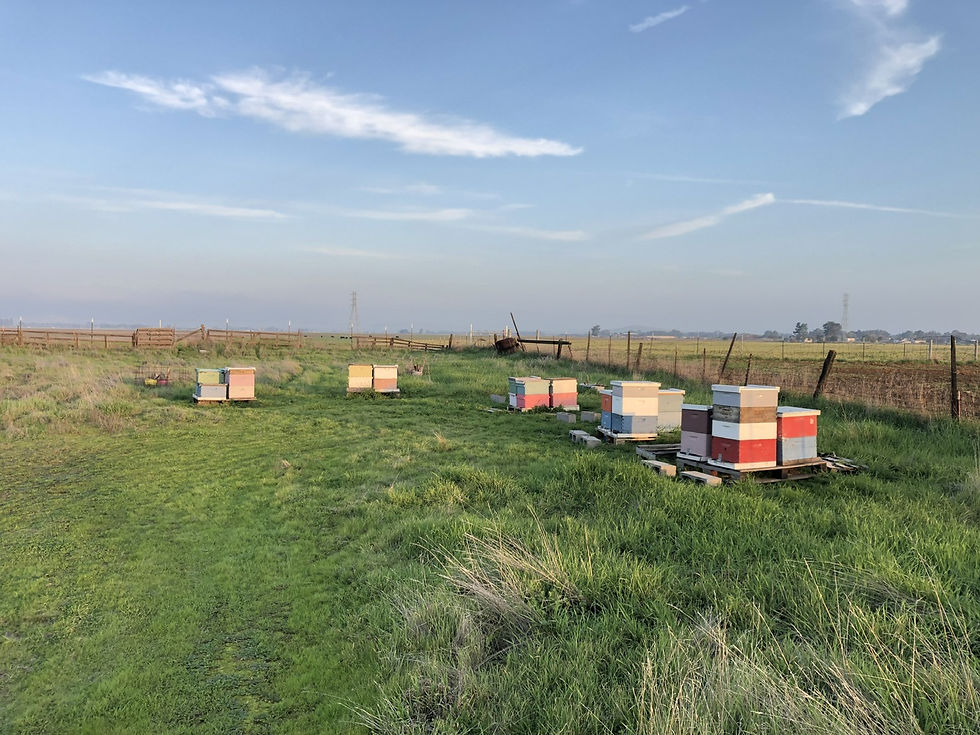
This winter I will only be doing one or two brief stops at the bee hives to make sure there are no major issues or surprises. The extra time provides an opportunity to take stock of how things went with the bee hives this year.
It is a time of rest, reflection and planning for the coming spring season when new things will begin to spring up again along with all the wildflowers and blossoms. We begin to ask ourselves, what can we do differently next year? What worked and what didn't work so well this year? What did we learn? And what are some new things we can try? It is a time of prayer and dreaming. Talking to God about what's next, not just for the bee hives but for my life and my family. A time of asking God what his plans are for next year.
How about you... how do you like to spend the winter season?
Blessings,
Jeff


Comments